Research. Synthesize. Win.
Win Strategic Accounts with Deep Intelligence
Account Profiling for ABM: From Shallow AI Summaries to Strategic Account Intelligence in Under One Week. Most enterprise sales teams know they need account intelligence. Few have access to research-grade insights they can trust with their most important deals.
Date
March 17, 2026

What we do

An enterprise ICT provider needed deep strategic intelligence for Tier-1 account engagement but found AI-generated profiles untrustworthy and platform databases lacking depth for complex enterprise deals. Frenus designed and executed research-grade account profiling, combining market analysis, company-specific intelligence, technology stack assessment, competitive positioning, and buying center mapping into synthesized strategic recommendations, delivering comprehensive PPTX intelligence decks (10-25 slides) within one week with presentation and focus question development.

THE CHALLENGE

Enterprise sales teams pursuing strategic accounts require intelligence depth that determines win probability in complex, multi-million euro deals. However, available intelligence sources fail at the moment it matters most. AI-generated account profiles produce plausible-sounding summaries that contain factual errors, miss critical context, and lack access to proprietary databases, industry reports, and competitive intelligence that shape enterprise buying decisions. Generic B2B data platforms provide shallow firmographic data, revenue, employee count, technology signals, but cannot answer the strategic questions that drive account strategy: Which projects are currently being executed? Which suppliers already have strategic relationships? How is ICT budget structured across business units? How does this account benchmark against competitors in digital maturity?

Sales teams attempting to win Tier-1 accounts with insufficient intelligence face cascading risks. They enter executive conversations without understanding current technology initiatives, embarrassing themselves with outdated assumptions. They propose solutions that conflict with recently awarded contracts to competitors they didn't know held strategic positions. They misread buying center dynamics, engaging wrong stakeholders or missing influencers who block procurement. They cannot position differentiated value because they lack competitive intelligence showing where incumbents are vulnerable.

Most critically, the AI commoditization of "account intelligence" is creating dangerous false confidence. Sales leaders receive AI-generated profiles that look comprehensive, present them in executive account planning sessions, and discover mid-deal that critical facts were wrong or key stakeholders were missing. In the age of AI, differentiation through superior insights becomes harder to achieve but more valuable when competitors rely on the same shallow, error-prone automated summaries. Strategic accounts demand research-grade intelligence, not AI-generated guesses.

HOW WE EXECUTE

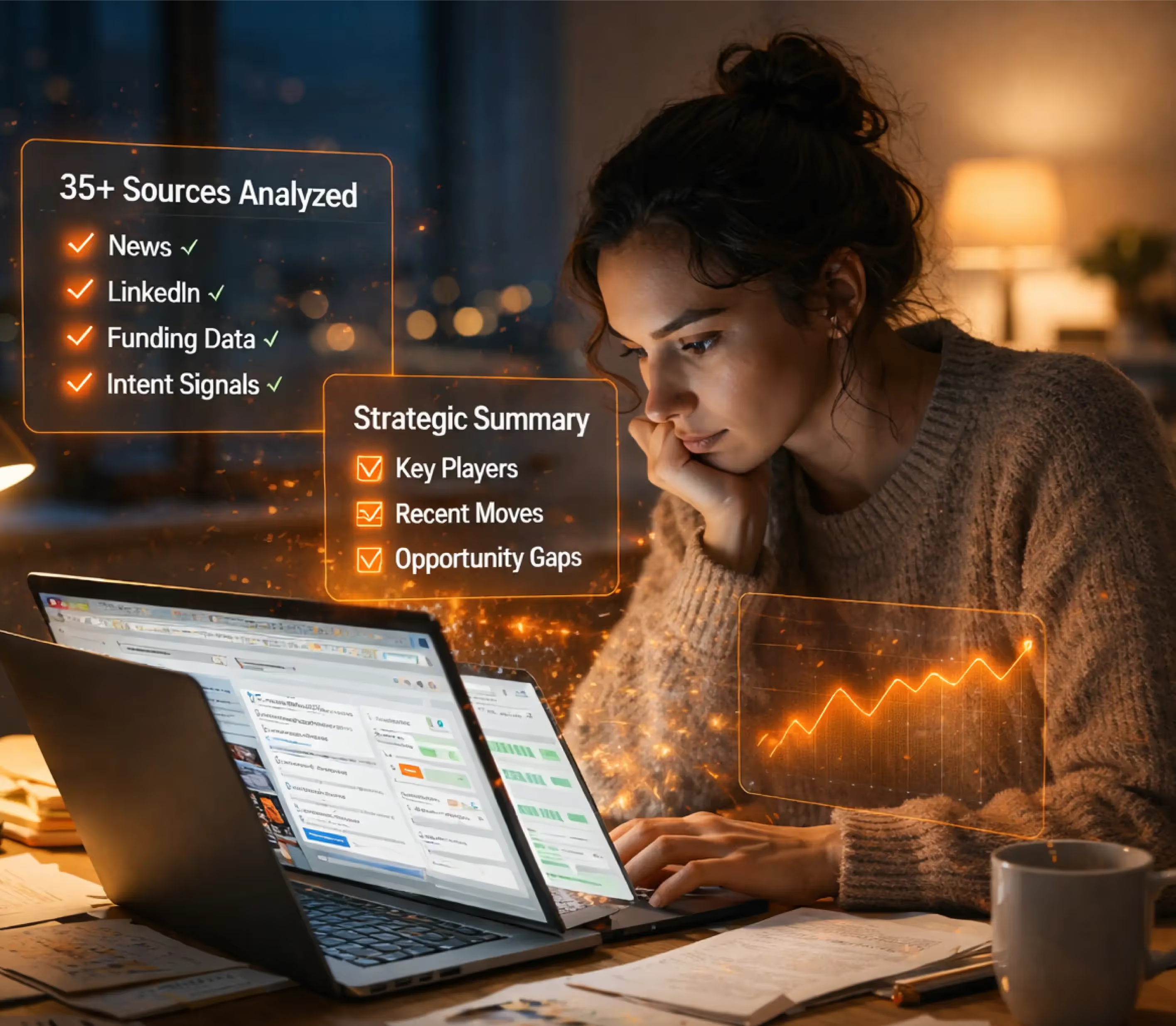
We deliver research-grade account profiling that combines market perspective, company-specific intelligence, and strategic synthesis into actionable PPTX intelligence decks. We analyze company strategy, current projects, technology infrastructure, supplier relationships, budget allocation patterns, and competitive positioning. We map buying centers with decision-maker intelligence and stakeholder influence assessment. We benchmark the account against industry peers on digital maturity and technology adoption. We synthesize findings into strategic recommendations addressing how to position solutions, which projects represent entry opportunities, which competitive relationships create barriers, and which buying center engagement sequences maximize win probability. Delivery occurs within one week with presentation of results and focus question development for account execution.

WHAT RESULTS

Clients receive comprehensive account intelligence decks (10-25 slides for full profiles, lighter formats for country-specific or 1:few accounts) combining external research with strategic perspective. Sales teams enter Tier-1 account conversations with confidence that intelligence is accurate, current, and strategically relevant rather than AI-generated summaries of questionable reliability. Account strategy discussions focus on execution rather than research gap-filling. Competitive positioning sharpens when teams understand incumbent vulnerabilities and relationship dynamics. Win rates improve when sales approach aligns with actual buying center structure, budget cycles, and project timing rather than generic best practices.

From Brief to Delivery

STEP I: COMPANY STRATEGY & MARKET POSITIONING ANALYSIS

We analyze the target account's strategic direction, business priorities, and competitive market positioning. We review annual reports, earnings calls, investor presentations, and executive communications to identify stated technology priorities, digital transformation initiatives, and operational challenges. We assess market position relative to industry peers, growth trajectory, and strategic pressures (market share defense, geographic expansion, product innovation, regulatory compliance). We map how technology investment supports broader business strategy, revealing which ICT initiatives receive executive sponsorship versus which remain operational nice-to-haves. This strategic foundation ensures account intelligence connects technology opportunities to business outcomes executives care about.

STEP II: CURRENT PROJECTS & TECHNOLOGY INITIATIVES RESEARCH

We identify active technology projects, digital transformation programs, and infrastructure modernization initiatives underway at the account. We combine public sources (press releases, case studies, technology vendor announcements) with proprietary research (conference presentations, job postings revealing project roles, procurement notices, regulatory filings). We document project scope, implementation timelines, involved business units, and named technology partners. We assess project status, early planning, active implementation, production rollout, to identify realistic engagement windows. This project intelligence reveals where budget is already committed, which initiatives create adjacent opportunities, and which timelines align with sales cycles.

STEP III: TECHNOLOGY STACK & SUPPLIER RELATIONSHIP MAPPING

We map the account's technology infrastructure, vendor relationships, and procurement patterns. We identify core systems (ERP, CRM, infrastructure platforms), middleware and integration layers, cloud providers and data center strategy, security and compliance tools, and emerging technology adoption (AI, IoT, edge computing). We document strategic vendor relationships, which suppliers hold preferred partner status, which contracts are up for renewal, which relationships show signs of friction (migration projects, RFP activity, executive changes). We assess technology stack implications for solution positioning: integration requirements, competitive displacement complexity, greenfield versus replacement opportunities.

STEP IV: ICT BUDGET STRUCTURE & INVESTMENT ANALYSIS

We analyze ICT budget allocation, spending patterns, and investment decision-making processes. We estimate total IT spend, CapEx versus OpEx distribution, centralized versus business unit budget control, geographic allocation for multinational accounts, and category spending (infrastructure, software, services, consulting). We identify budget cycle timing, approval thresholds requiring executive sign-off, and historical spending trends revealing expansion or contraction. We benchmark ICT investment intensity against industry peers, identifying whether the account is technology leader, fast follower, or laggard. Budget intelligence enables realistic deal sizing and timing alignment with procurement authority and budget availability.

STEP V: BUYING CENTER MAPPING & STAKEHOLDER INTELLIGENCE

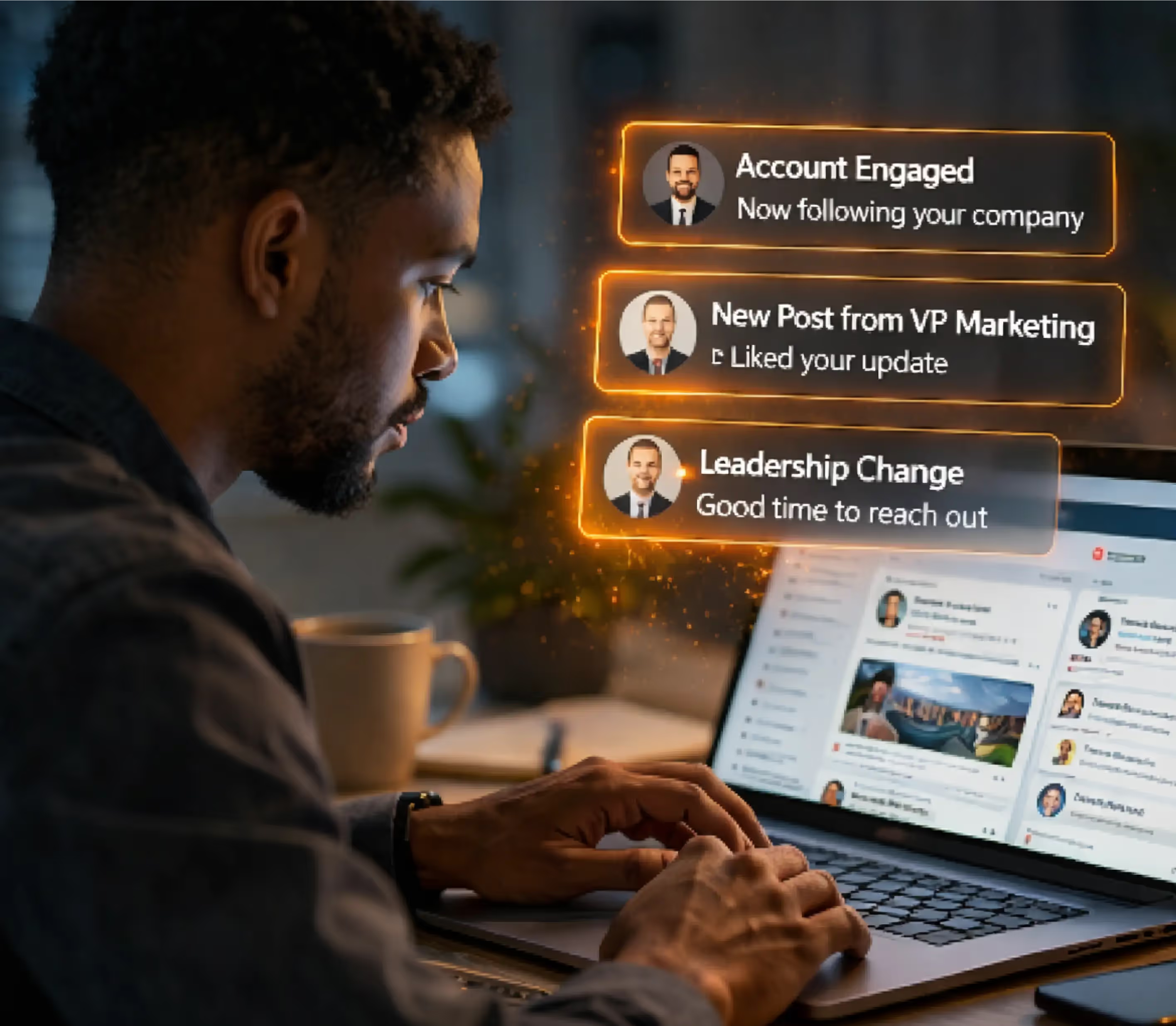
We map decision-making stakeholders, organizational structure, and procurement governance. We identify CIO/CTO and IT leadership roles, business unit executives sponsoring technology initiatives, procurement and vendor management functions, external advisors and consultants influencing decisions, and technical evaluators and user stakeholders. We document reporting lines, budget authority, vendor selection influence, and known preferences or biases. We assess buying center dynamics: centralized versus decentralized decision-making, consensus-driven versus executive directive, risk tolerance for new vendors versus incumbent preference. We provide LinkedIn profile intelligence and engagement history where available, enabling personalized outreach strategy.

STEP VI: STRATEGIC SYNTHESIS & RECOMMENDATIONS PRESENTATION

We synthesize research findings into strategic account intelligence deck (PPTX format, 10-25 slides for full global account profiles, lighter formats for country-specific or 1:few targeting). Deck structure includes: executive summary with key findings, company strategy and market context, current projects and technology initiatives, supplier landscape and competitive positioning, ICT budget and investment priorities, buying center map with engagement recommendations, and strategic next steps for account penetration. We present findings to client account team, highlighting focus questions that emerged during research and recommended engagement sequences. Presentation discussion often reveals additional intelligence needs or account-specific hypotheses requiring validation, which we document for ongoing account development support.

Let´s Chat

We’ll get back to you shortly.

By clicking you agree to with our Privacy Policy.
Thank you! Your submission has been received!
Oops! Something went wrong while submitting the form.
Prefer LinkedIn instead?

Thomas Allgeyer

Founder & CEO

Connect on LinkedIn →

Win Strategic Accounts with Deep Intelligence: Impact

  • Research-grade account intelligence delivered within one week (not months of internal research)
  • Comprehensive PPTX decks (10-25 slides) combining market analysis, company intelligence, and strategic recommendations
  • Multiple profile formats: full global accounts, light country-specific, 2-pager 1:few targeting
  • Current project intelligence revealing where budget is committed and adjacent opportunities exist
  • Technology stack and supplier relationship mapping showing competitive landscape and displacement complexity
  • ICT budget structure analysis enabling realistic deal sizing and timing alignment
  • Buying center mapping with decision-maker intelligence and stakeholder influence assessment
  • Strategic synthesis connecting technology opportunities to business outcomes executives prioritize
  • Presentation of results with focus question development for account execution
  • Account teams entering Tier-1 conversations with confidence in intelligence accuracy and strategic relevance
  • Win rates improved when sales approach aligns with actual buying dynamics, not AI-generated assumptions
  • How is this different from AI-generated account profiles or B2B data platforms?

    AI profiles produce plausible summaries that lack accuracy verification, miss proprietary intelligence, and cannot synthesize strategic context. B2B platforms provide shallow firmographic data without answering strategic questions: Which projects are active? Which suppliers have relationships? How is budget structured? We combine multiple intelligence sources - annual reports, technology vendor announcements, procurement patterns, industry benchmarking - into research-grade analysis with strategic synthesis. Our backgrounds consulting ICT providers on product portfolio development give us technology depth that generic research firms and AI tools cannot match. We're researchers by profession, not content generators.

    Why PPTX format instead of database access or CRM integration?

    Strategic account intelligence requires synthesis and context, not raw data dumps. PPTX format enables visual presentation of complex relationships - buying center org charts, technology stack diagrams, competitive positioning maps, project timelines - that database records cannot convey effectively. Decks become account team assets used in planning sessions, executive briefings, and internal alignment discussions. They're presentation-ready for account reviews with sales leadership. The format also ensures intelligence is consumed through strategic narrative, not isolated data points that miss critical context.

    What happens after the intelligence deck is delivered - do you support ongoing account development?

    Our engagement delivers the foundational account intelligence package with presentation and focus question development. Ongoing account development, relationship building, opportunity pursuit, proposal development, is managed by the client's account team. However, accounts are dynamic: new projects launch, executive changes occur, competitive relationships shift. Many clients engage us for quarterly account intelligence refreshes or project-specific deep dives when new opportunities emerge. The initial profiling establishes baseline; updates keep intelligence current as account situations evolve.

    Can you profile accounts in industries outside ICT, or is this specific to technology buyers?

    While our deep technology expertise serves ICT providers selling to enterprise buyers, our research methodology applies across industries. We've profiled accounts for strategic consultancies pursuing advisory relationships, industrial manufacturers evaluating partnership opportunities, and PE firms conducting commercial due diligence. The account profiling framework, strategy analysis, project intelligence, supplier mapping, budget assessment, buying center research, translates to any complex B2B sale requiring enterprise account intelligence. Our ICT specialization means technology buying intelligence is particularly deep, but we're researchers first.

    Let´s Chat

    We’ll get back to you shortly.

    By clicking you agree to with our Privacy Policy.
    Thank you! Your submission has been received!
    Oops! Something went wrong while submitting the form.
    Prefer LinkedIn instead?

    Thomas Allgeyer

    Founder & CEO

    Connect on LinkedIn →