Earn Attention First
Account-Based Social Engagement: Warming Cold Accounts Before Outreach
Strategic accounts demand recognition before conversation. We run tool-supported LinkedIn engagement programs that build familiarity with key stakeholders across major accounts, combining virtual relationship-building with offline event meetings to turn cold prospects into warm conversations—all while reducing time investment and eliminating the guesswork from ABM execution.
Date
March 11, 2026
Future Frontiers
ICT & Digital Growth
Industrial Manufacturing
Mobility & Infrostracture

What we do

The Challenge

Cold emails to strategic accounts fail when prospects don't recognize your name. Sales teams targeting major accounts face multiple barriers: limited time to engage authentically on LinkedIn, lack of structured processes for multi-stakeholder engagement, unclear permission boundaries between internal teams and external support, and difficulty coordinating activity across complex buying groups. The result? Months of wasted effort on accounts that never warm up, or sporadic LinkedIn activity that fails to build momentum because nobody owns the process systematically.

How We Execute

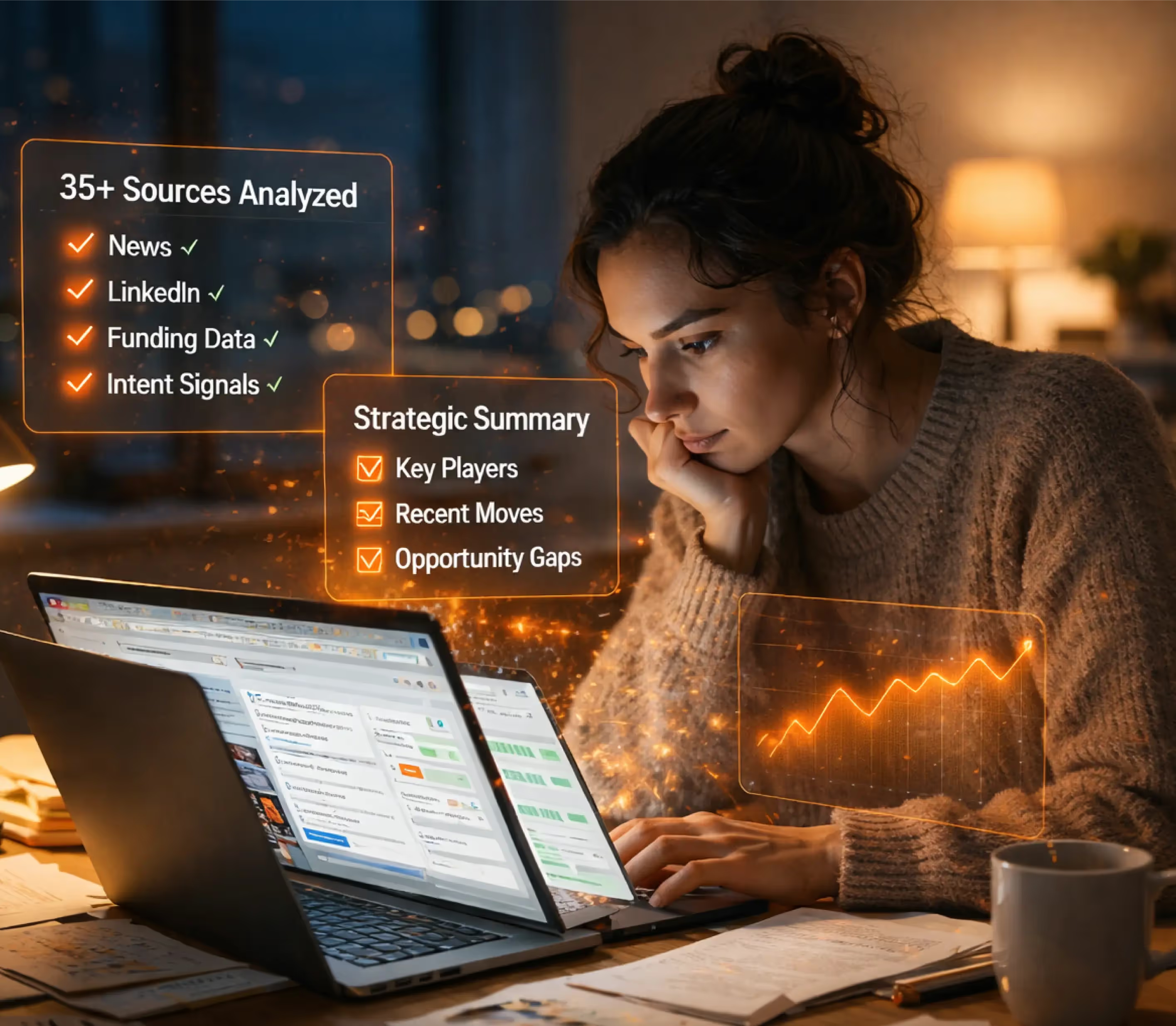
We run tool-supported engagement programs that guide your team through each step of warming strategic accounts. We identify key stakeholders within target accounts, build personalized engagement calendars showing what to comment on and when, provide daily monitoring and steering to keep activity consistent, and combine virtual engagement with offline event strategies to move from LinkedIn familiarity to in-person meetings. Your team executes the actual interactions while we handle the structure, tracking, and real-time guidance.

What Results Look Like

Strategic account stakeholders recognize your name before your sales team reaches out. Response rates to outreach emails increase 3-5x because prospects already know who you are. Meeting conversion rates at industry events jump dramatically when attendees have seen your insights in their feed for weeks. Time investment per account drops by 60% while engagement quality and consistency improve, and sales cycles shorten by 25-30% because initial trust barriers have already been cleared before formal conversations begin.

From Strategy to Results

Step I: Account Selection and Stakeholder Mapping

We conduct an initial workshop with your sales and marketing teams to identify priority strategic accounts and map key stakeholders within each buying group. We use LinkedIn intelligence tools to identify which stakeholders are actively posting, what topics they engage with, and when they're most active. We establish engagement objectives, define appropriate boundaries, and align on how internal teams and external support will coordinate without overlap.

Step II: Tool-Supported Engagement Execution

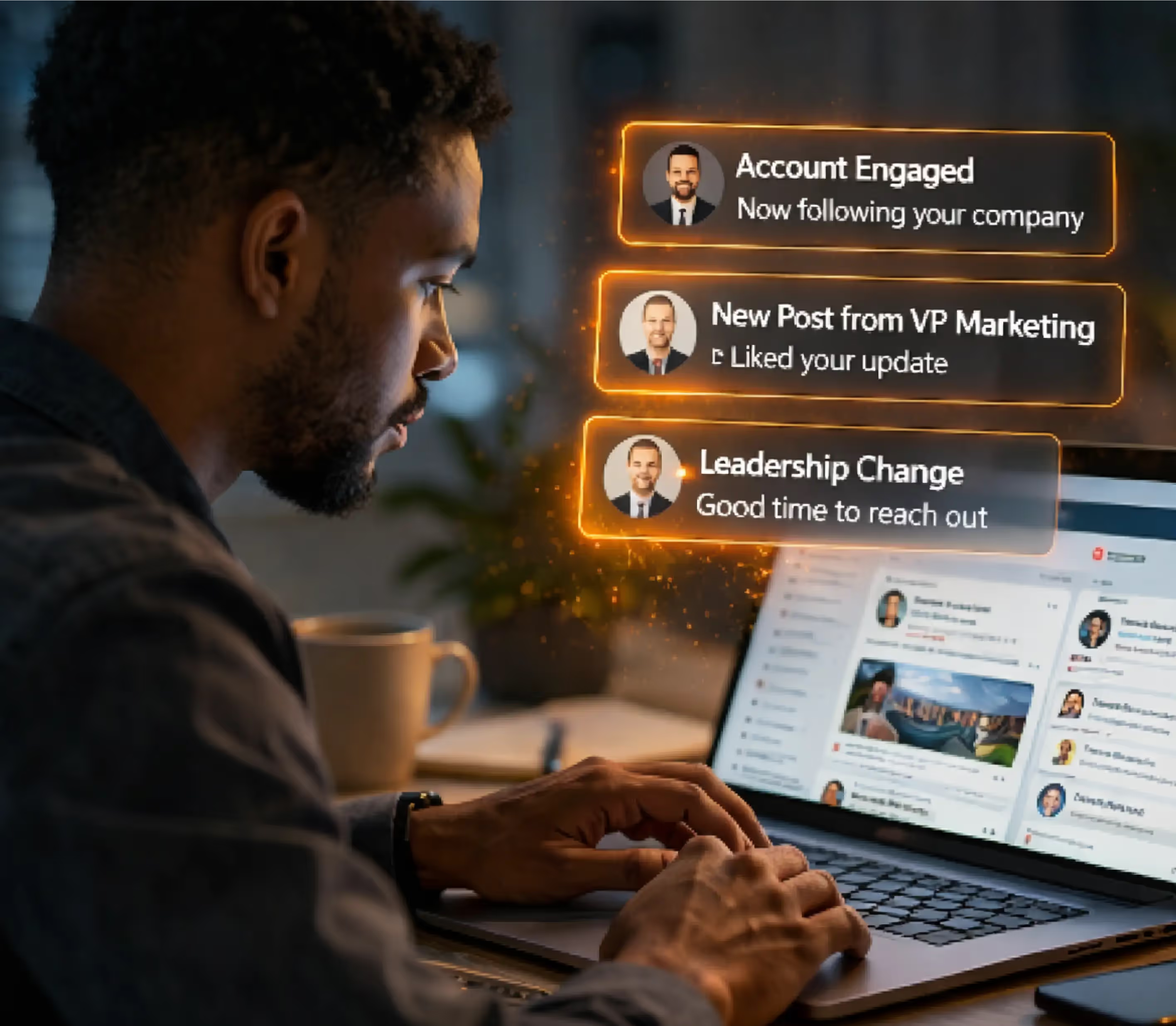
We build personalized engagement calendars showing specific posts to comment on, angles that add genuine value, and optimal timing windows. Your team receives daily monitoring alerts and real-time guidance on what to engage with, suggested comment approaches that demonstrate expertise without selling, and notifications when high-value opportunities appear (stakeholder frustrations, questions, initiative announcements). We track engagement patterns to ensure activity remains natural and credible.

Step III: Virtual-to-Offline Transition

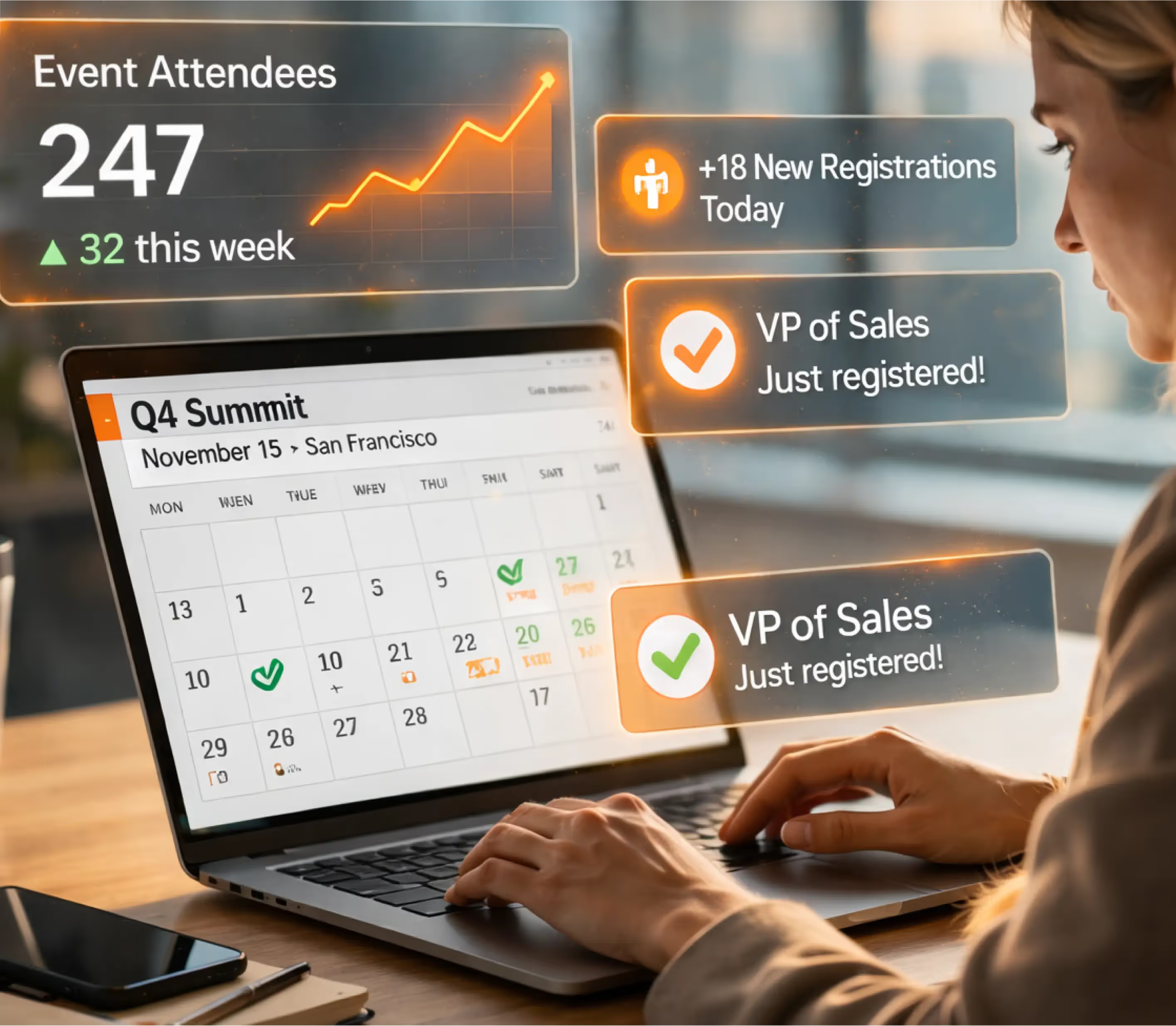
As LinkedIn familiarity builds, we identify upcoming industry events where target stakeholders will attend. We coordinate pre-event engagement spikes to increase recognition, provide outreach templates for requesting in-person meetings that reference prior LinkedIn interactions, and create talking points that connect online conversations to offline relationship-building. Once stakeholders show engagement reciprocity, we coordinate formal outreach from your sales team with emails that reference specific LinkedIn interactions.

Step IV: Ongoing Optimization and Expansion

We review engagement data monthly to identify which stakeholders are warming, which need adjusted strategies, and which accounts show readiness for deeper sales conversations. As initial accounts progress, we expand the program to new strategic targets, refine comment strategies based on response rates, and continuously optimize the balance between time investment and relationship-building impact.

Account-Based Social Engagement Impact

  • Email Response Rates: 3-5x higher response rates to outreach when prospects recognize sender from LinkedIn
  • Meeting Conversion: 40-50% conversion from LinkedIn DM to scheduled call vs. 5-10% for cold email
  • Event Meeting Success: 4x higher in-person meeting acceptance when pre-event LinkedIn engagement establishes familiarity
  • Time Efficiency: 60% reduction in hours spent per account while maintaining higher quality, more consistent engagement
  • Sales Cycle Reduction: 25-30% shorter sales cycles due to pre-established trust and credibility
  • Multi-Threading Success: Engaging 5+ stakeholders per account increases deal win rates from 15% to 35%
  • Relationship Depth: Accounts with 90+ days of LinkedIn engagement show 2x higher contract values at close
  • Pipeline Velocity: Warm accounts move through qualification stages 40% faster than cold outreach equivalents
  • How is account-based social engagement different from regular LinkedIn activity?

    Regular LinkedIn activity is random and sporadic, posting occasionally, commenting when you remember, hoping someone notices. Account-based social engagement is systematic and strategic: targeting specific stakeholders within priority accounts, building personalized engagement calendars that ensure consistent touchpoints, tracking which interactions build familiarity and which fall flat, and coordinating activity across sales teams so multiple people aren't accidentally engaging the same stakeholder chaotically.

    What tools do you use to support this process?

    We combine LinkedIn Sales Navigator for stakeholder identification and activity monitoring, engagement tracking tools that schedule reminders and log interactions, analytics platforms that measure response patterns and identify optimal engagement times, and internal coordination dashboards that show which team members are engaging which stakeholders to prevent overlap or gaps. The tools handle monitoring and tracking; your team handles authentic, human engagement.

    How do you ensure engagement doesn't feel automated or salesy?

    We provide comment angle guidance that adds genuine insight rather than generic praise ("Great post!"). We vary engagement patterns so interactions don't follow robotic schedules (every Tuesday at 9 AM signals automation). We limit engagement frequency per stakeholder to 2-3 touchpoints weekly maximum to avoid appearing overly persistent. And we coach teams to engage with content related to stakeholder interests, not just content directly about your solution category.

    Can this work if our sales team doesn't have time for daily LinkedIn activity?

    Yes. We reduce time investment dramatically by doing the monitoring and research work, then delivering specific, actionable engagement opportunities rather than asking teams to scroll LinkedIn hoping to find something. Reps spend 10-15 minutes daily on guided engagement rather than 60+ minutes searching for opportunities. And we coordinate across teams so if one person is overloaded, another can pick up engagement continuity for shared accounts.

    How do you combine LinkedIn engagement with offline event strategies?

    We identify which industry events target stakeholders will attend, then increase LinkedIn engagement 4-6 weeks before the event to maximize name recognition. We provide pre-event outreach templates that reference LinkedIn interactions and suggest in-person meetings. At events, your team has conversation starters rooted in real online exchanges. Post-event, we maintain LinkedIn engagement to keep relationships warm between in-person touchpoints.

    What industries benefit most from Account-based social engagement?

    Complex B2B sectors with long sales cycles and relationship-dependent deals see strongest impact: enterprise technology where trust and thought leadership drive vendor selection, industrial manufacturing where technical credibility matters more than aggressive sales tactics, professional services where expertise demonstration precedes engagement, and strategic consulting where personal brand and insight sharing open doors that cold emails cannot.

    How do you measure whether the engagement is actually working?

    We track leading indicators: stakeholder response rates to comments, whether they start engaging with your content unprompted, DM reply rates, and email open/response rates post-engagement. We measure conversion milestones: LinkedIn connections accepted, meeting requests granted, event meeting conversions. And we analyze pipeline impact: time from first engagement to qualified opportunity, deal velocity for warm vs. cold accounts, and win rates for accounts with 90+ days engagement vs. traditional outreach.

    Let´s Chat

    We’ll get back to you shortly.

    By clicking you agree to with our Privacy Policy.
    Thank you! Your submission has been received!
    Oops! Something went wrong while submitting the form.