The Challenge
Enterprise B2B deals now involve 6-10 stakeholders on average, expanding to 17+ contacts in complex technology and manufacturing sectors. Sales teams relying on single champions lose over 80% of deals when that contact leaves or loses internal influence. Without systematic buying center mapping, sellers waste months building relationships with contacts who lack decision authority, miss critical blockers who derail deals late-stage, and face the dreaded "no decision" outcome driven by internal misalignment rather than competitive loss.
How We Execute
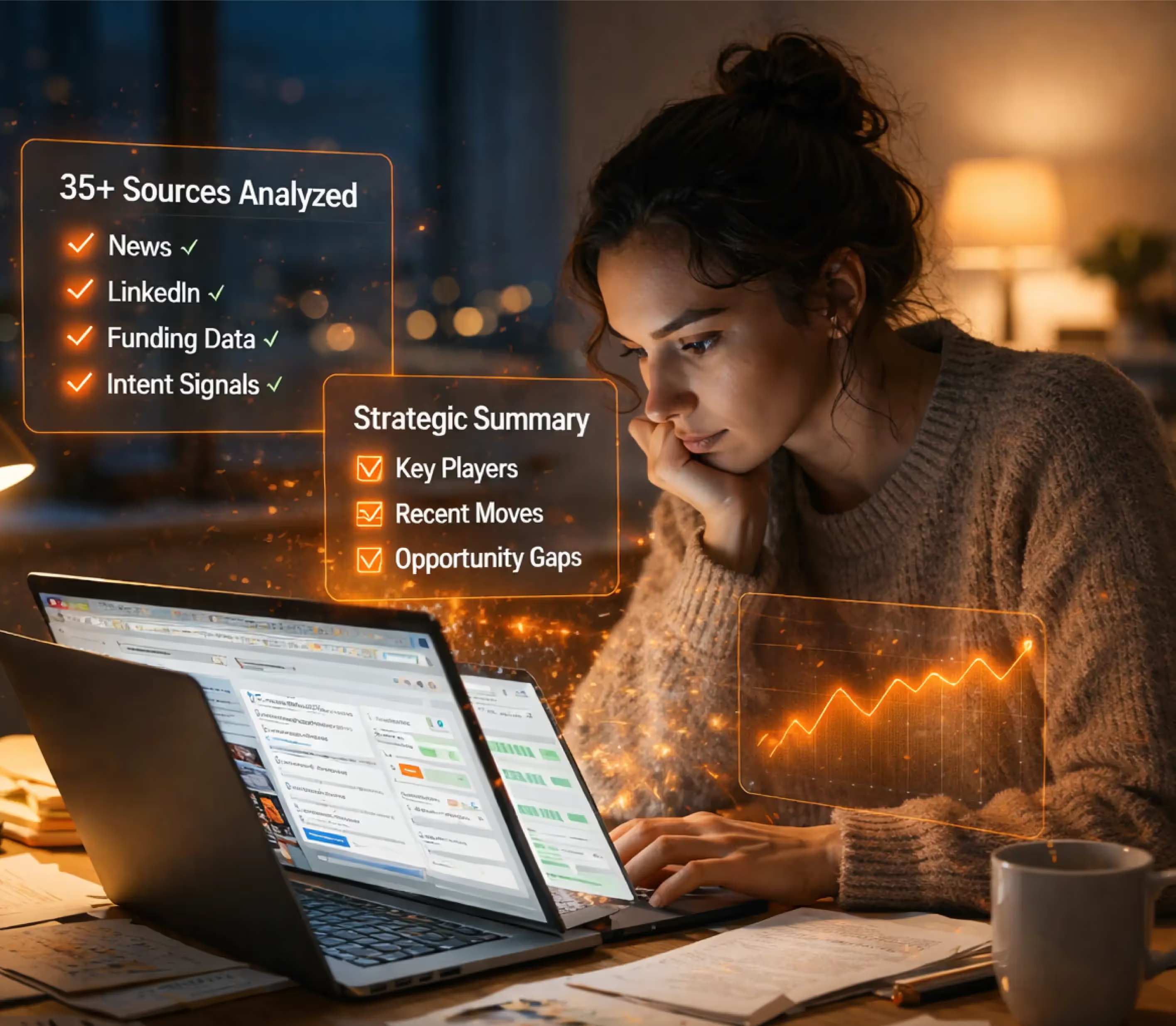
We conduct deep topic-specific research using keyword-led searches across LinkedIn, conference talks, published articles, and press releases to identify individuals associated with your solution area. We categorize stakeholders into buying center roles (initiators, users, gatekeepers, buyers, deciders, influencers) based on organizational position, public statements, and initiative involvement, then analyze how responsibilities distribute across departments to reveal cross-functional collaboration patterns and hidden influence networks.
What Results Look Like
Clients receive comprehensive buying center maps delivered in Excel for CRM integration or PowerPoint for executive presentations. Sales teams gain clarity on who initiates needs, controls budgets, holds final approval authority, and influences decisions through technical or executive expertise, enabling multi-threaded engagement strategies that close deals 30% faster with win rates increasing from 5% (single-threaded) to 30% (five+ stakeholders engaged).

We conduct an initial workshop with your sales and account management teams to define the specific topic or initiative relevant to your solution (e.g., "Software Defined Vehicle Development," "Cloud Migration," "Customer Experience Transformation"). We establish research parameters, identify priority accounts, and align on stakeholder role definitions specific to your sales process and industry buying patterns.
We execute keyword-led searches across LinkedIn profiles, conference speaker lists, published articles, press releases, and internal databases to identify individuals associated with the defined topic. We analyze public statements, presentation topics, organizational announcements, and project involvement to map stakeholders to specific initiatives and assess their level of engagement, expertise, and organizational influence.
We categorize identified stakeholders into buying center roles—initiators who first recognize needs, users who will deploy the solution, gatekeepers controlling information access, buyers handling formal procurement, deciders with final approval authority, and influencers who sway decisions through technical or executive expertise. We analyze how responsibilities distribute across departments, identifying cross-functional collaboration patterns and topic ownership structures.
We assess the maturity level of topic initiatives within each account and how deeply embedded they are organizationally. We identify which stakeholders drive strategic direction versus tactical implementation, who holds budget authority, and which individuals bridge departmental silos as internal champions or cross-functional coordinators who lack obvious executive titles but hold significant sway over purchasing decisions.
We compile buying center insights into client-preferred formats, Excel sheets for structured filtering and CRM integration, or PowerPoint slides for executive presentations and quick visual overviews. Each stakeholder entry includes role classification, department affiliation, initiative involvement, key focus areas, and recommended engagement strategies based on their position within the buying center and influence over final decisions.
We conduct review sessions with sales teams to validate stakeholder mappings against real engagement experiences. As accounts progress through sales cycles, we update buying center maps to reflect organizational changes, new initiative developments, and evolving stakeholder influence patterns, ensuring sales strategies remain aligned with current decision-making structures rather than outdated assumptions about authority and relationships.

How is buying center identification different from basic account research?
Traditional account research identifies job titles and org charts. Buying center identification reveals who actually influences decisions regardless of hierarchy, maps informal networks showing who trusts whom, categorizes stakeholders by their specific role in purchasing processes (initiator vs. decider vs. blocker), and analyzes cross-functional dynamics that determine whether deals close or stall in internal misalignment.
What industries benefit most from buying center mapping?
Complex B2B sectors with long sales cycles and high deal values see greatest impact: enterprise technology and SaaS (multiple IT, security, and business stakeholders), industrial manufacturing (engineering, procurement, finance, operations alignment required), automotive and mobility (R&D, manufacturing, compliance, cybersecurity involvement), healthcare and life sciences (clinical, administrative, IT, legal approval chains), and professional services where client decision committees span multiple practice areas.
How do you identify stakeholders who aren't publicly visible?
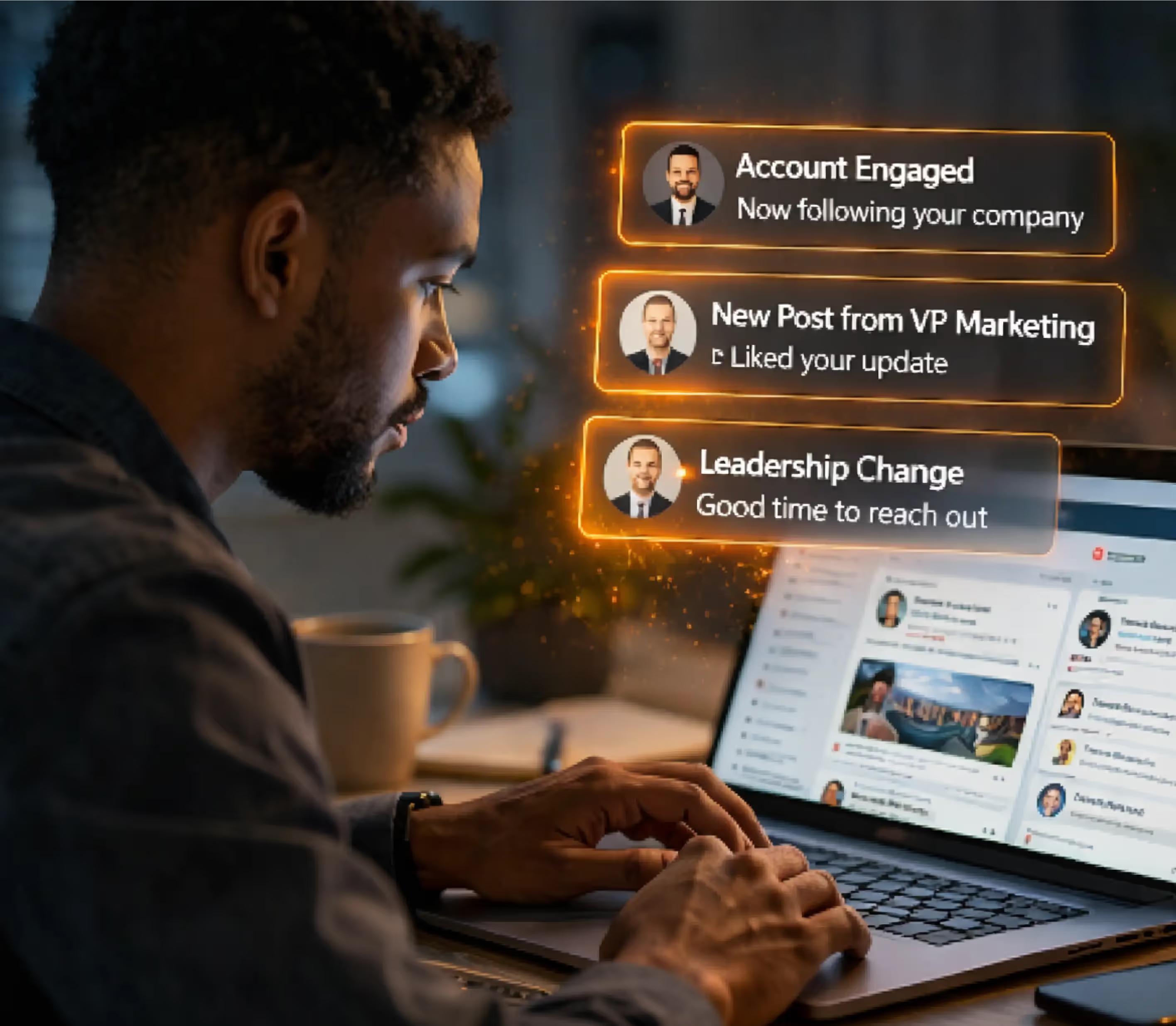
We combine multiple research vectors: LinkedIn analysis reveals team structures and initiative participation, conference speaker lists surface technical experts and thought leaders, published articles and press releases identify project champions, patent filings show R&D leadership, procurement databases reveal purchasing authority, and strategic questioning during initial sales conversations helps map the complete organizational landscape systematically.
Do you integrate buying center data with our CRM?
Yes. We deliver stakeholder intelligence in Excel format with fields mapped to your CRM structure (Salesforce, HubSpot, Microsoft Dynamics), enabling direct import of contact roles, influence levels, and engagement recommendations. We can also populate CRM relationship fields showing connections between stakeholders, department affiliations, and initiative ownership to give sales teams actionable intelligence within their existing workflow tools.
How often should buying center maps be updated?
Enterprise organizations experience constant flux, people change roles, initiatives evolve, and new stakeholders enter decision processes. We recommend quarterly updates for active pipeline accounts, immediate refreshes when major organizational changes occur (leadership transitions, restructuring announcements, M&A activity), and annual comprehensive reviews for strategic accounts even when deals aren't actively in flight to maintain relationship intelligence.
Can buying center identification help with account expansion?
Absolutely. Buying center research reveals white space opportunities by showing which departments haven't engaged with your solutions, identifies potential champions in business units adjacent to current relationships, surfaces cross-sell opportunities when stakeholders mention related pain points or initiatives, and provides early warning when budget authority shifts to new decision-makers who may not know your value proposition.
What deliverable formats do you provide?
We adapt to your team's preferences: Excel spreadsheets with sortable fields for CRM import and detailed filtering, PowerPoint slide decks with org chart visualizations and stakeholder profiles for executive presentations, interactive relationship maps showing influence networks and cross-functional connections, and written narrative reports explaining buying dynamics, political landscapes, and recommended engagement sequences for complex accounts.

How we solve real problems for real clients
We work with leaders who refuse to accept the status quo. Our teams bring deep industry knowledge and a relentless focus on results.
Elit facilisis maecenas euismod vulputate. Dignissim natoque nascetur donec urna in vel vitae.