navigating the future of strategic leadership
We equip executives with decision-grade market intelligence and strategic alignment frameworks, so leadership teams act with conviction, not consensus paralysis.

Trusted by Leading B2B Organizations






Executives frequently operate with a market view shaped more by internal assumptions than external reality. Critical blind spots — emerging competitors, shifting customer priorities, regulatory trajectories — remain invisible until they become urgent, leaving leadership teams strategically reactive rather than proactively positioned to capture opportunity.
Markets are moving faster, signals are more contradictory, and the cost of inaction compounds daily. Yet traditional planning frameworks were built for stable environments — forcing leaders to make consequential bets with analytical tools and decision processes fundamentally unsuited to the ambiguity and velocity they now face.
Even the strongest strategy fails when the leadership team lacks genuine consensus on direction and priorities. Misalignment between C-suite, business units, and regional heads creates invisible friction — slowing execution, diluting focus, and producing the organizational paralysis that allows competitors to advance while internal debates continue unresolved.
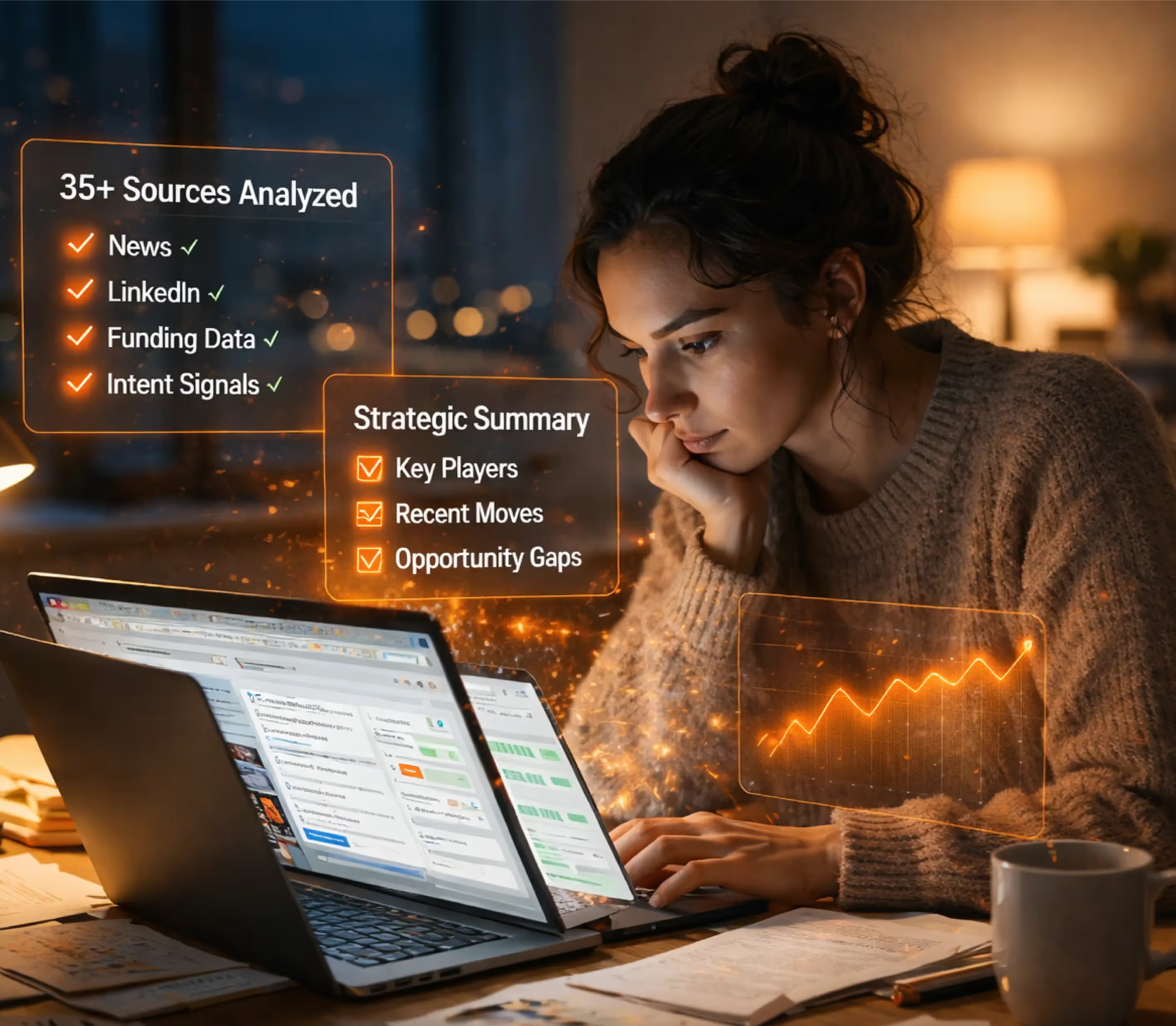
By the time traditional research and internal reporting cycles deliver their conclusions, the market window they were designed to inform has often already closed. Executives need intelligence that arrives at the speed of decision-making — not weeks later when the strategic moment has passed and the data serves only as retrospective confirmation.
Leaders face constant tension between delivering immediate operational results and investing in strategic positioning for the future. Without a structured framework to balance both horizons simultaneously, organizations default to short-term firefighting — systematically sacrificing long-term competitive advantage for quarterly performance metrics.
Not all data is decision-grade. Executives are surrounded by information of varying quality, bias, and relevance — from analyst reports with broad generalizations to internal data shaped by organizational politics. Without a trusted, independent intelligence source, leadership teams risk anchoring critical decisions on insights that were never built to carry that strategic weight.
Markets evolve faster than traditional planning cycles allow, requiring executives to make high-stakes decisions with greater velocity. Delayed insights become obsolete insights, making rapid, actionable intelligence the competitive necessity that separates decisive leaders from those left behind.
Dynamic shifts across competition, regulation, and customer needs demand a comprehensive market view at the executive level. Strategic decisions grounded solely in internal capacity and sales performance miss critical external signals that reshape market realities.
Internal discussions naturally gravitate toward capacity constraints and organizational priorities rather than market realities. Embedding a dedicated market advocate into strategic deliberations ensures external customer and competitive perspectives counterbalance internal thinking, preventing misaligned decisions.
Artificial intelligence provides useful data synthesis but cannot reliably guide consequential strategic decisions. Executive judgment informed by deep human expertise remains irreplaceable for navigating ambiguity and making calls where the cost of error is organizational survival.
Waiting months for comprehensive research defeats the purpose when markets shift weekly. Deep, accelerated insights that combine speed with rigor enable executives to move decisively while competitors remain trapped in slower research cycles.
When all competitors access identical AI-generated insights, those insights become strategic commodities offering no edge. Proprietary human-led research that surfaces unique perspectives and contrarian signals creates the differentiation that informs winning strategic choices.
We move beyond internal capacity discussions and AI-generated market summaries to inject real-time market perspective into executive decisions. By combining rapid intelligence gathering with senior-level strategic dialogue, we ensure leadership choices balance organizational constraints with competitive realities.

How we solve real problems for real clients
We work with leaders who refuse to accept the status quo. Our teams bring deep industry knowledge and a relentless focus on results.



.png)
.png)
.png)
.png)