
Best of LinkedIn: Field Marketing CW 22/ 23
Field marketing activity over the two-week period shows a clear shift from event execution toward revenue impact, buyer intelligence, and experience-led engagement. The strongest themes are centered on pipeline discipline, pre-event preparation, AI-enabled workflows, experiential formats, and tighter follow-up.
Date
June 10, 2026
Field Marketing
Thomas Allgeyer

Methodology: Every two weeks we collect most relevant posts on LinkedIn for selected topics and create an overall summary only based on these posts. If you´re interested in the single posts behind, you can find them here: https://linktr.ee/thomasallgeyer. Have a great read!

Listen to our podcast

If you prefer listening, check out our podcast summarizing the most relevant insights from Field Marketing CW 22/ 23:

Events are Becoming Revenue Programs

  • Events are being reframed as full-funnel commercial programs with clear ownership across marketing, sales, partnerships, customer success, and leadership
  • Success is increasingly measured through opportunity creation, pipeline influence, relationship progression, and revenue impact
  • Teams are focusing on fewer, higher-value events where the target audience, buyer access, and business case are stronger
  • Budget decisions are moving toward ROI clarity, not historical participation or brand presence alone

Pre-Event Intelligence is Now a Core Advantage

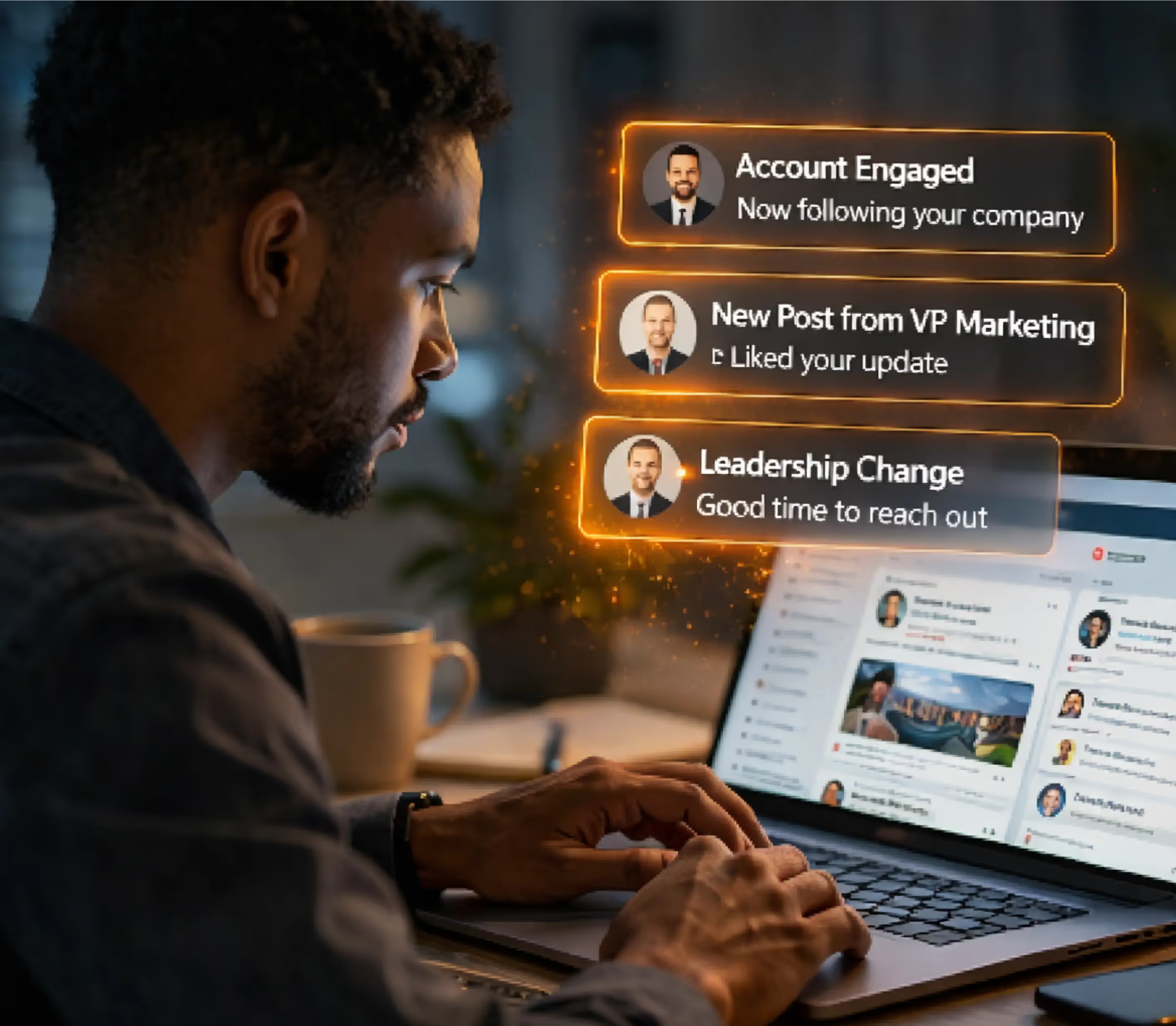
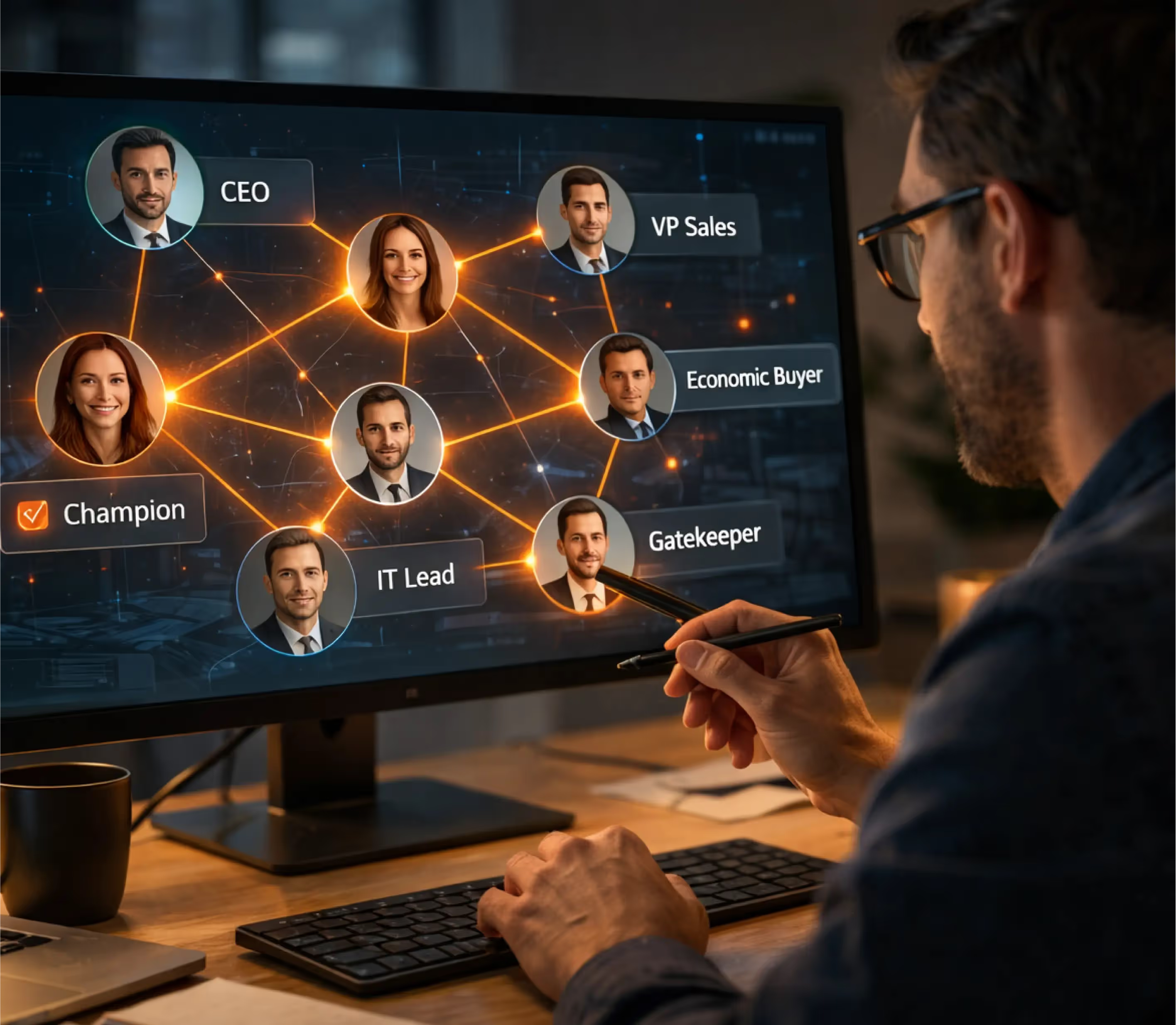
  • Stronger teams are identifying target accounts, decision-makers, and priority meetings before arriving onsite
  • Audience quality is becoming more important than event size, with ICP fit and buying authority driving event selection
  • Manual exhibitor-list research and unstructured attendee review are being replaced by more systematic account matching and CRM preparation
  • Weak preparation is increasingly seen as a direct cause of poor event ROI

Booths Need to Drive Conversations, Not Just Visibility

  • Booth quality is no longer defined by size or visual polish alone
  • Strong booths need clear messaging, fast readability, open navigation, and a compelling reason for attendees to stop
  • Passive displays, generic banners, and static product setups are losing effectiveness in high-cost event environments
  • The best booth concepts create participation, conversation, content, or surprise while supporting commercial follow-up

Experiential Marketing is Gaining Strategic Weight

  • Live experiences are being used to cut through digital saturation and create stronger memory, trust, and engagement
  • Audiences increasingly expect immersive, adaptive, and participatory formats rather than standard exhibit setups
  • Experience design is becoming more closely linked to business outcomes, not just brand impression
  • Event teams are expected to manage emotion, flow, interaction, and commercial relevance as part of the same experience

Operations And Follow-Up Decide Event ROI

  • Event quality depends heavily on invisible operational discipline, including setup checks, traffic flow, role clarity, contingency planning, and onsite coordination
  • Strong execution requires clear team responsibilities, tested workflows, and structured lead-capture processes
  • Follow-up is where much of the commercial value is won or lost
  • Personalized outreach, CRM context, conversation notes, and timely sales activation are replacing generic post-event email blasts

AI and Event Technology are Becoming Practical Tools

  • AI is being used to improve attendee intelligence, account scoring, enrichment, outreach, forecasting, routing, and content repurposing
  • Event technology is helping teams capture context, manage access, personalize engagement, and connect onsite activity with CRM workflows
  • The strongest use cases reduce manual effort and improve relevance
  • AI is not positioned as a substitute for human judgment in technical accuracy, keynote voice, relationship-building, or live decision-making

Content and Community Extend Event Value

  • Events are increasingly treated as content engines, not one-off gatherings
  • Sessions, demos, booth conversations, customer questions, and onsite interviews can become campaign material, sales enablement, and first-party insight
  • Community-led formats are gaining relevance, especially when designed around peer exchange rather than vendor selling
  • Event value now continues through always-on engagement, content reuse, data, and relationship development

Subscribe to newsletter

Subscribe to receive the latest blog posts to your inbox every week.

Please confirm your GDPR consent to join our mailing list.
By subscribing you agree to with our Privacy Policy.
Thank you! Your submission has been received!
Oops! Something went wrong while submitting the form.