Field Marketing is framed less as event management and more as a revenue, data, and relationship engine. The strongest themes are sharper event selection, tighter sales alignment, AI-supported workflows, post-event orchestration, and a renewed premium on human connection as digital channels become noisier.
Date
June 24, 2026
Field Marketing
Thomas Allgeyer
01
Feature Newsletter
Your 1st July just got a purpose
B2B Ignite 2026 brings together the sharpest minds in B2B marketing for one high-impact day. Keynotes, practical workshops, and peer networking — all in one place.
The event also introduces the Ignite Exchange: hands-on problem-solving sessions designed for real takeaways.
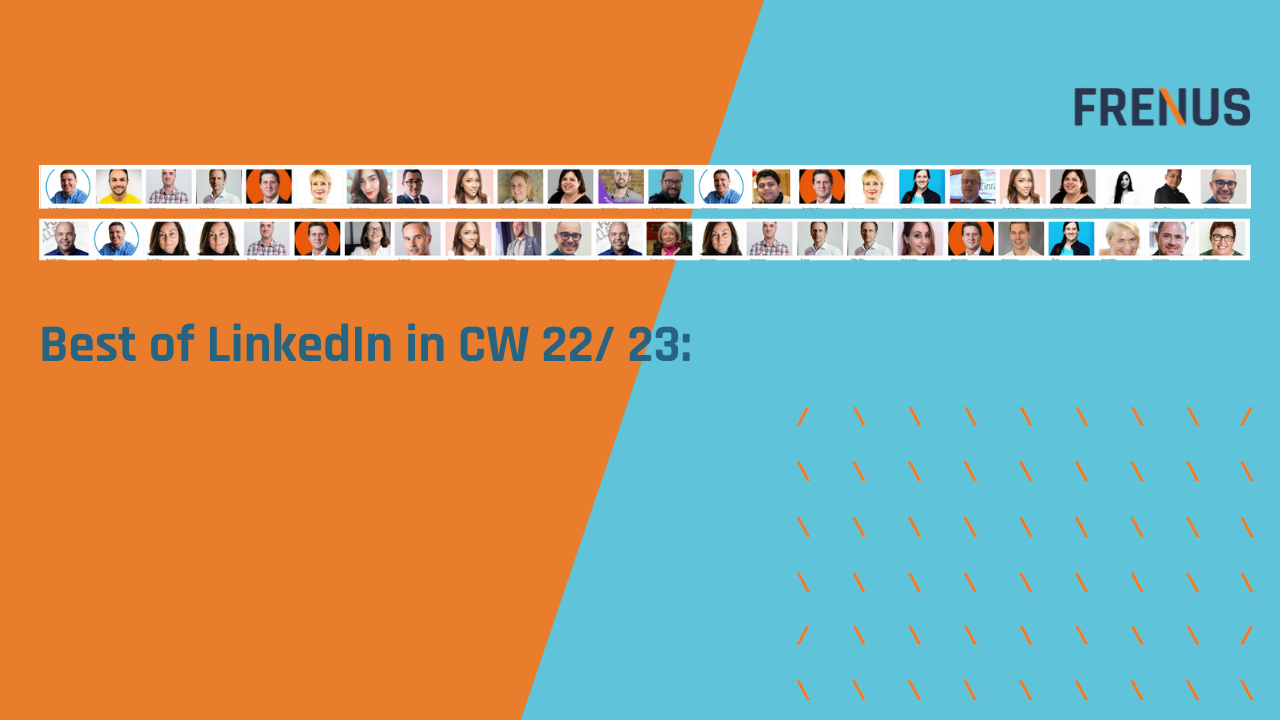
Name dropping? Here you go. These are the speakers you'd miss:
Margaret Adam (SAP), Toni Allen FCIM (IET), Ryan Almond (Henkel), Michael Barber (Startech), Adam Bertelsen (Baringa), Jake Bird (JIM AI), Paul Collier (FunnelFuel), Sharon Collins Chartered Marketer MCIM (Propolis), Karen Cooper, MBA (Wolters Kluwer), Wayne Deakin (Bray Leino), Amie Farrell (Deliveroo), Skip Fidura, FIDM (Warehouse Marketing), Renata Florio (Gravity Global), Michael Gividen (Omne), Roland Glass (HelloKindred), Tom Golland (Gravity Global), Andy Grant (Jamf), Amanda Grimmer (IBM), Philipp Harmuth (Utimaco), Joel Harrison (B2B Marketing), Robyn Hartley (Paper Kite Media), Andrea H. (Eastnets), Andy Johnson (Hut 3), Adam Johnston (FunnelFuel), Steve Kemish (IMG), Sourabh Kothari (Lead2Pipeline), Francisca Leitão Borges (Cisco), Brian Macreadie (Addleshaw Goddard), Nick Mason (Turtl), Laura Matthews (UiPath), Michelle McCann, PhD. (Propolis), David McGuire (Windhover), Fiona McKenzie (Marketbridge), Tessa McManus (Profound), Juan Mejia (The Associated Press), Jon Mycroft (Informa TechTarget), Ryan Nelsen (StackAdapt), Robert Norum (Propolis), Richard O'Connor (B2B Marketing), Stephen O. (Demand AI), Russ Powell (Sharper B2B Marketing), Shane Redding (Propolis), Peter Richards (DEEP Manufacturing), Helen Richardson-Walsh OLY MBE (Olympic Gold Medallist), Dan Roche (Workbooks), Devon Rowe (Mimecast), Pearly Siffel (Euromonitor), Barbara Stewart (Propolis), Scott Stockwell (Propolis), Ben Wylie BFP FCA (IET)
Methodology: Every two weeks we collect most relevant posts on LinkedIn for selected topics and create an overall summary only based on these posts. If you´re interested in the single posts behind, you can find them here: https://linktr.ee/thomasallgeyer. Have a great read!
Listen to our podcast
If you prefer listening, check out our podcast summarizing the most relevant insights from Field Marketing CW 22 - 25:
Field Marketing as GTM Strategy
Field Marketing increasingly positioned as a core GTM channel, not a standalone event function
Event strategy expected to start from ICP, revenue goals, target account coverage, and sales priorities
Random event participation criticized in favor of deliberate playbooks before, during, and after the event
Smaller, curated rooms increasingly seen as higher value than large-scale conferences when decision-maker density is stronger
Strategic seat at the table linked to translating activity into pipeline, account influence, and business outcomes
ROI, Measurement, and CFO Readiness
Badge scans, attendance, impressions, and booth traffic repeatedly challenged as weak performance indicators
Stronger metrics emphasized: qualified meetings, ICP fit, buyer density, target account coverage, follow-up conversations, pipeline contribution, and behavioral change after the event
Event ROI framed as a multi-stage system, with value created before the event and often lost in the first 72 hours after
Brand impact viewed on a longer time horizon, not only through short-term pipeline attribution
CFO scrutiny appears as a central pressure point, with weak revenue traceability positioned as a risk to event budgets
Pre-Event Demand Creation
Pre-event work highlighted as the major differentiator between passive booth presence and pipeline creation
Strong practices include audience research, pre-booked meetings, outbound campaigns, paid social, personal thought leadership, and clear reasons to visit a booth
Event outreach increasingly treated like a demand-generation campaign rather than a logistics task
Recognition before the event matters more than hoping high-value contacts appear organically
Anchored moments, time-bound activations, and creative invitations used to shift booth visits from chance to intent
Experience Design and Booth Strategy
Booth quality defined by clarity, memorability, story, and conversion, not size or production spend
Static booths, pull-up banners, and generic demos criticized as poor uses of expensive floor space
Immersive concepts, unconventional structures, branded storytelling, and hands-on experiences positioned as stronger attention drivers
Experiences expected to spark conversations and make the right people remember the brand after leaving
Trade show success framed as a sequence: strategy, ideas, design, execution, and measurable outcomes
Executive, Community, and Relationship-Led Formats
Executive roundtables, intimate gatherings, and curated networking highlighted as high-value formats
Strong execution depends on curation, conversation design, continuation, and senior-level sales preparation
Community-building framed around shared problems rather than brand messaging
Customer facetime positioned as a serious KPI, especially where trust and decision-maker relationships compress sales cycles
Human connection emerges as the counterweight to AI noise, saturated digital channels, and hidden buyer research
AI and Event Technology are Becoming Practical Tools
AI is being used to improve attendee intelligence, account scoring, enrichment, outreach, forecasting, routing, and content repurposing
Event technology is helping teams capture context, manage access, personalize engagement, and connect onsite activity with CRM workflows
The strongest use cases reduce manual effort and improve relevance
AI is not positioned as a substitute for human judgment in technical accuracy, keynote voice, relationship-building, or live decision-making
Post-Event Orchestration
Follow-up repeatedly identified as the most underused and highest-risk part of event marketing
Strong motions include enrichment, scoring, routing, personalized outreach, sales ownership of priority conversations, and disciplined seven-day follow-up
Marketing owns the process infrastructure, while sales owns the commercial conversation with high-priority accounts
The post-event period also supports retention, surveys, announcements, content reuse, and community continuation
Events increasingly viewed as content machines and relationship engines, not isolated calendar moments
Operations, Team Resilience, and Execution Quality
Event teams described as high-pressure operators managing live risk, constant change, stakeholder alignment, and contingency planning
Setup quality, SOPs, trackers, backups, templates, and clear role definition seen as core scalability levers
Field Marketing excellence depends on fewer avoidable decisions, protected attention, and better internal systems
Crew well-being and post-event recovery positioned as operational necessities, not soft topics
Smooth event delivery remains largely invisible, but poor execution can quickly damage the attendee experience
Market and Commercial Signals
Field Marketing spend appears resilient where digital channels are becoming more expensive, fragmented, and harder to attribute
Flat budgets increase pressure to run fewer, higher-impact events with stronger commercial logic
Experiential budgets and audience access increasingly packaged as partnership opportunities with clear ROI narratives
Exhibit agencies are expected to move from production vendors to strategic partners focused on outcomes
Private-equity activity around CloserStill and Emerald signals continued confidence in B2B events as a commercial category
Product and Innovation Signals
AI-generated personalized gifts show how attendee data can move beyond recap reporting into memorable brand moments
Access-control automation and in-room tools point toward more operationally embedded event software
AI-supported forecasting, lead enrichment, follow-up, and conference-selection workflows indicate a shift toward event-GTM intelligence
Simpler event platforms may gain ground as software costs fall and complexity becomes less defensible
Event tech value increasingly defined by sponsor confidence, attendee seamlessness, and business visibility rather than feature volume
Subscribe to newsletter
Subscribe to receive the latest blog posts to your inbox every week.
Thank you! Your submission has been received!
Oops! Something went wrong while submitting the form.