Screen. Map. Reach out
Capture the KHZG Hospital Digitalization Wave
Complete Hospital Screening, Stakeholder Mapping & Event-Coordinated Outreach: From 1,800 Hospitals to Qualified Decision-Maker Conversations in Under Six Weeks
Date
March 31, 2026


Most health tech providers know KHZG created €4.3 billion in hospital digitalization demand. Few have a systematic approach to identify which hospitals to target and how to reach decision-makers.
The Krankenhauszukunftsgesetz created unprecedented demand for hospital digitalization solutions, with €4.3 billion in federal and state funding driving mandatory implementation of patient portals, digital documentation, medication management, and IT security infrastructure. By 2025, hospitals face penalties of up to 2% per inpatient case for failing to implement required digital services, creating urgent procurement pressure across Germany's 1,800+ hospital landscape.
However, not all hospitals represent equal opportunity. Digital maturity varies dramatically, some hospitals have already secured KHZG funding and contracted solutions, others delayed implementation and now face compressed timelines, and many struggle with internal decision-making complexity that stalls procurement regardless of funding availability. Hospital buying centers involve IT directors, medical directors, administrative leadership, and external consultants, each with different priorities and evaluation criteria.
Health tech providers attempting to capture KHZG opportunity without systematic market intelligence face compounding challenges. They cannot efficiently identify which hospitals have active budgets and urgent timelines versus which are locked into competitor relationships or lack organizational readiness. They waste sales resources pursuing hospitals that appear viable on paper but have internal barriers preventing procurement. They struggle to reach actual decision-makers within complex hospital organizations. Most critically, they lack the stakeholder intelligence required to navigate hospital buying centers and the event coordination strategy that accelerates relationship building in a relationship-dependent market.
We run a structured hospital market screening and engagement sprint, moving from universal hospital database to qualified decision-maker conversations within five to six weeks. We begin with comprehensive screening of Germany's complete hospital landscape, applying multi-dimensional filtering criteria: KHZG funding status, digital maturity indicators, hospital size and type, ownership structure, technology spending patterns, and competitive vendor intelligence. We map decision-making stakeholders within priority hospitals, identifying IT directors, medical leadership, administrative executives, and external advisors with influence over technology procurement. We then execute LinkedIn-coordinated outreach combined with strategic event-based meeting scheduling, engaging decision-makers digitally while coordinating face-to-face conversations at industry conferences where both parties already attend.
Clients receive a complete hospital market intelligence package: prioritized target hospital list with KHZG funding status and procurement readiness assessment, stakeholder mapping with decision-maker contact intelligence, and active engagement pipeline from LinkedIn outreach and event coordination. Sales resources focus on hospitals with genuine near-term opportunity rather than pursuing the entire German hospital landscape indiscriminately. Decision-maker conversations begin within five to six weeks, often progressing to formal procurement discussions where hospital readiness and solution fit align. Commercial strategy shifts from broadcast approach to targeted account engagement calibrated to hospital-specific context.

We compile and analyze Germany's complete hospital landscape, all 1,800+ acute care hospitals, university clinics, and specialized facilities eligible for KHZG funding. We gather foundational intelligence: hospital name, location, ownership structure (public, private, church-affiliated), bed count, service offerings, and accreditation status. We layer KHZG-specific data: funding application status, approved project categories, implementation timelines, and penalty exposure for non-compliance. This universal screening establishes the full addressable market before applying filtering criteria that separate viable prospects from hospitals unlikely to procure in the near term.
We apply client-specific filtering criteria to identify hospitals representing highest-probability opportunity. Filtering dimensions include: KHZG funding status (approved projects, implementation timeline, penalty risk exposure), digital maturity indicators (current EHR systems, existing vendor relationships, IT infrastructure investment history), hospital characteristics (size, ownership type, teaching hospital status, financial health), geographic concentration for sales efficiency, and competitive intelligence (known vendor relationships, recent procurement activity, consultant influence). We score and rank hospitals across these criteria, producing a prioritized target list typically numbering 50-150 hospitals where solution fit, budget availability, and procurement timing align with client's go-to-market capacity.
For each priority hospital, we map the decision-making stakeholder network. We identify IT directors and CIOs responsible for technology procurement, medical directors and chief physicians influencing clinical system requirements, administrative leadership (Geschäftsführer, CFOs) holding budget authority, and external consultants or advisors with procurement influence. We gather LinkedIn profile intelligence, professional backgrounds, recent publications or speaking engagements, and network connections to the client's organization. We document organizational structure, reporting lines, and decision-making processes where publicly available. This stakeholder mapping transforms hospital names into actionable engagement targets with identified contact persons and relationship context.
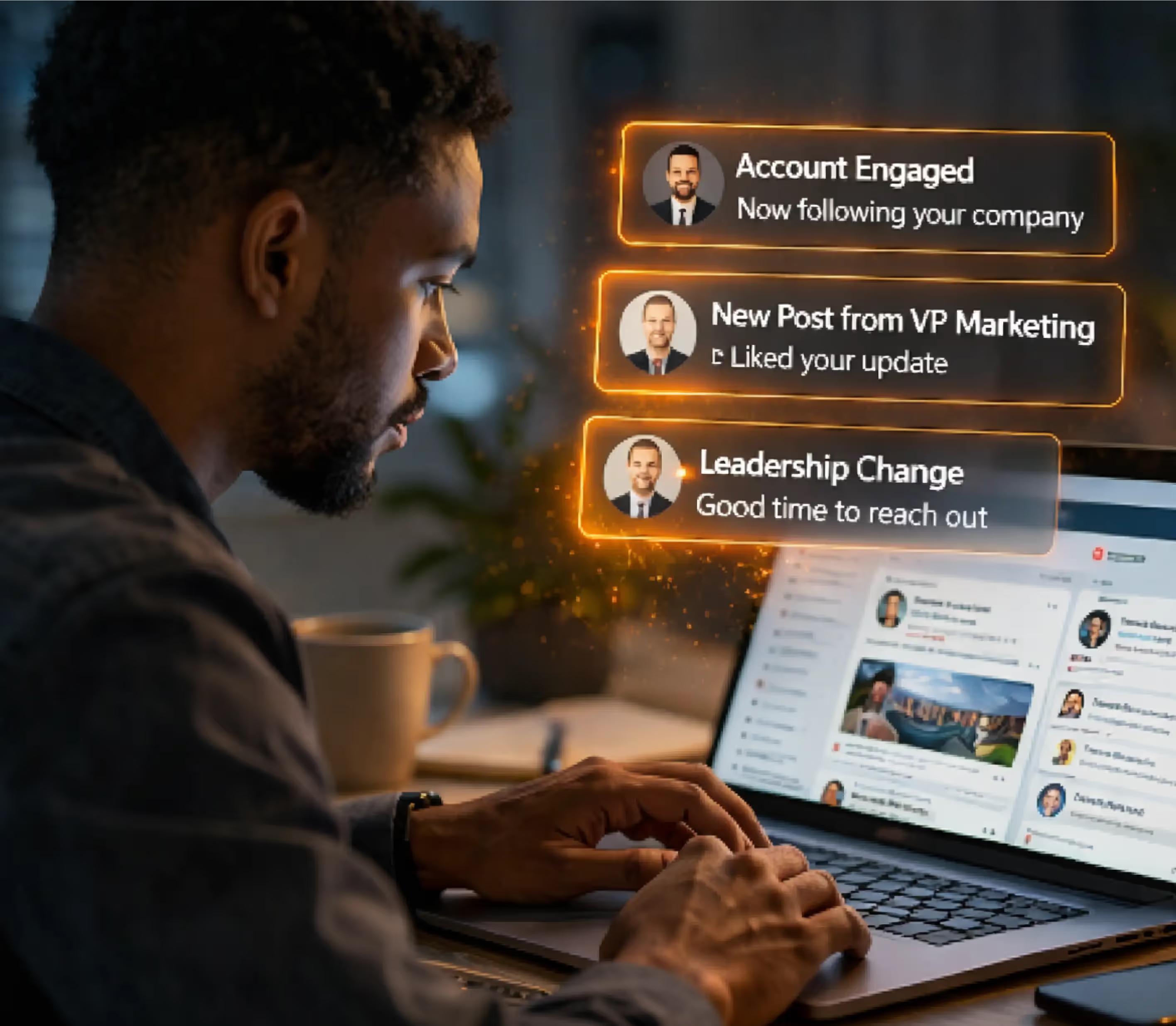
We develop hospital-specific outreach messaging calibrated to KHZG context and stakeholder role. For IT directors, we emphasize technical integration, security compliance, and implementation efficiency under compressed timelines. For medical leadership, we highlight clinical workflow impact and patient experience improvements. For administrative executives, we focus on penalty avoidance, funding utilization, and total cost of ownership. We create personalized LinkedIn connection requests and messaging sequences incorporating hospital-specific intelligence, referencing their KHZG project status, acknowledged challenges in their annual reports, or shared network connections. Messaging acknowledges the relationship-dependent nature of health tech procurement while creating genuine value in initial outreach.
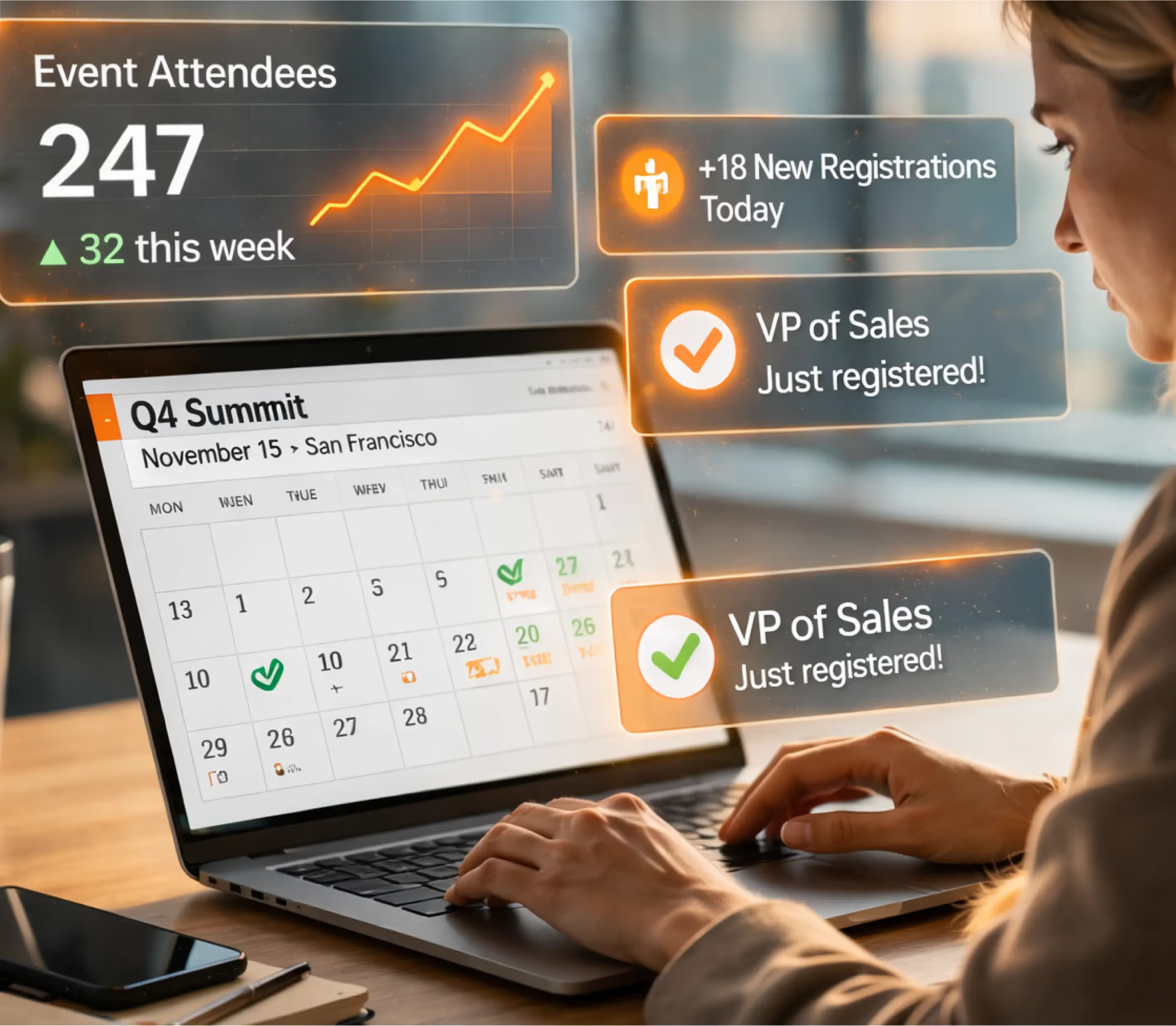
We identify upcoming health tech conferences, KHZG implementation workshops, and hospital digitalization forums where target decision-makers are likely to attend. We coordinate LinkedIn outreach timing with these events, initiating digital engagement two to four weeks before conferences to establish familiarity, then scheduling face-to-face meetings at the event itself. This hybrid approach transforms cold LinkedIn outreach into warm introductions and accelerates relationship building that would otherwise require months of sequential touchpoints. Event coordination also enables efficient meeting concentration, conducting five to ten hospital decision-maker conversations in two days rather than traveling to individual hospital sites over weeks.
We deliver structured handover to the client's sales team including: complete prioritized hospital target list with scoring rationale, stakeholder mapping with contact intelligence and engagement history, active pipeline from LinkedIn outreach and scheduled event meetings, and documented outreach methodology for ongoing campaign execution. Hospitals that responded positively are handed over with full conversation context, enabling sales team to continue relationship development without losing momentum. Hospitals that did not respond are flagged with recommended re-engagement timing and alternative stakeholder contacts. The screening methodology and stakeholder mapping framework become repeatable assets as KHZG implementation phases continue and new hospital procurement cycles emerge.
We’ll get back to you shortly.


We combine multiple intelligence sources: official KHZG funding approval databases published by federal states and BAS (Federal Office for Social Security), hospital annual reports and press releases announcing implementation projects, vendor case studies and reference customer lists revealing existing commitments, and LinkedIn activity showing hospital IT leaders engaging with specific solution providers. We cross-reference these signals to distinguish hospitals with approved funding still evaluating vendors from those already locked into competitor relationships. Perfect visibility is impossible, but systematic intelligence reduces wasted outreach significantly.
Hospital decision-makers are notoriously difficult to reach via cold calling and face intense vendor solicitation pressure around KHZG implementation. LinkedIn enables efficient initial engagement and relationship warming, while industry events provide natural meeting context where both parties are already investing time. The combination transforms cold outreach into warm introductions, decision-makers who've engaged on LinkedIn are significantly more receptive to event meetings than strangers requesting hospital site visits. Event concentration also enables meeting five to ten prospects in two days versus weeks of individual travel.
Our engagement covers the journey from universal hospital screening through qualified decision-maker engagement, database analysis, prioritization, stakeholder mapping, LinkedIn outreach, and event coordination. Full sales cycle execution, solution demonstrations, technical evaluations, contract negotiations, is managed by the client's sales and solution engineering teams. We hand over with complete hospital intelligence and active pipeline so the transition is seamless. We can provide ongoing outreach campaign support to maintain engagement momentum across broader target lists if requested.
Contact databases provide names and titles. We deliver prioritized target hospitals with KHZG funding context, procurement readiness assessment, decision-maker stakeholder mapping, and active engagement from LinkedIn outreach and event meetings. The difference is between having a list and having a qualified pipeline. We compress the work that typically takes health tech sales teams three to six months of manual research and cold outreach into a five to six week structured sprint, delivering not just data but actual decision-maker conversations and relationship momentum.
We’ll get back to you shortly.
How we solve real problems for real clients
We work with leaders who refuse to accept the status quo. Our teams bring deep industry knowledge and a relentless focus on results.